
KI in Robotic Heart Surgery
Dr. Julius Kaemmel, a cardiac surgeon-in-training at the DHZC, was awarded the Dr. Rusche Research Project grant in Cologne. The grant, amounting to approximately 60,000 euros, will enable him to develop an AI-based virtual feedback system in collaboration with researchers from the Institute for Cardiovascular Computer-Assisted Medicine (ICM) (Photo: DGTHG/Jörg Heupel).
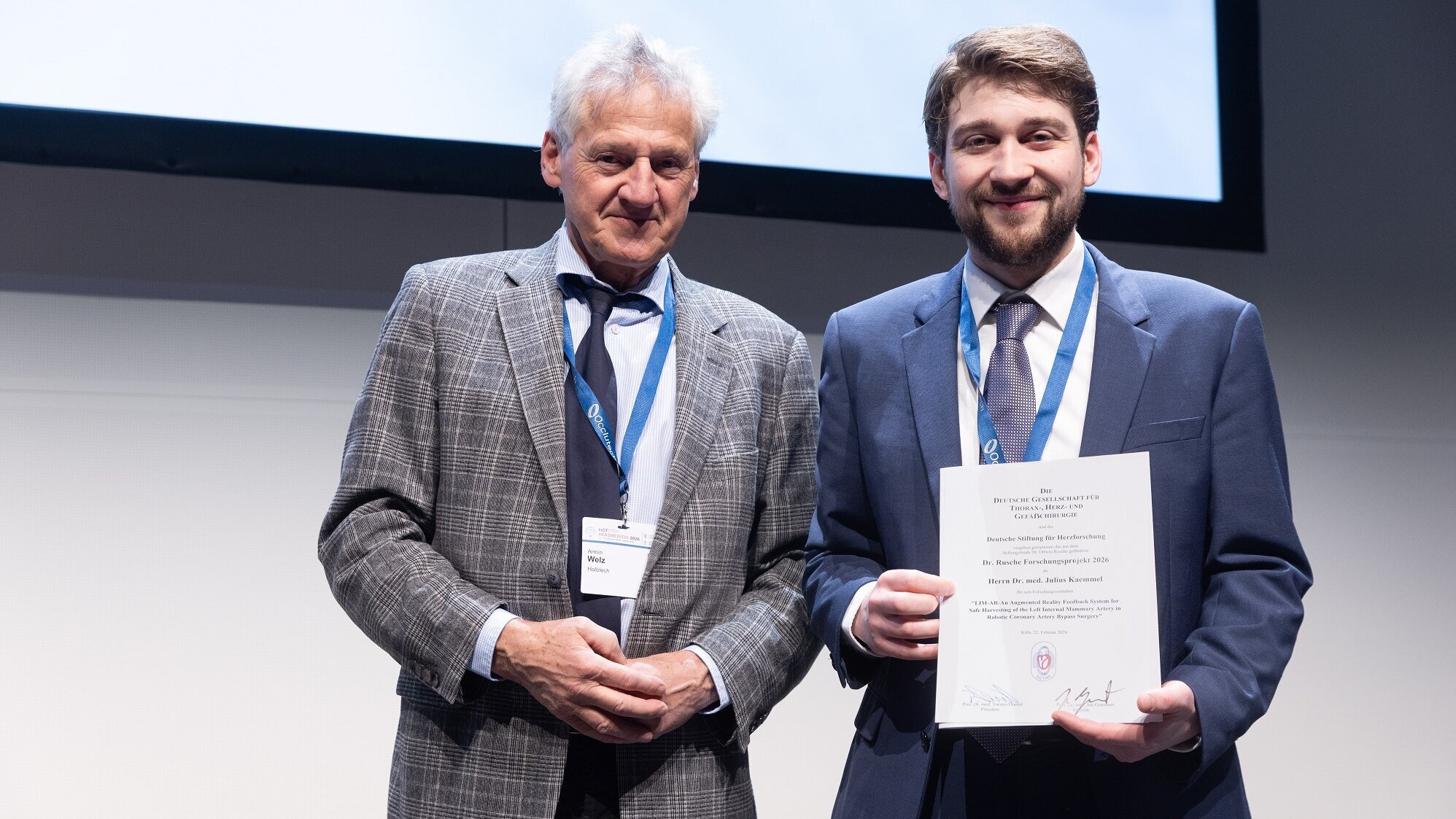
Dr. Julius Kaemmel, a cardiac surgeon-in-training at the DHZC, was awarded the Dr. Rusche Research Project grant in Cologne. The grant, amounting to approximately 60,000 euros, will enable him to develop an AI-based virtual feedback system in collaboration with researchers from the Institute for Cardiovascular Computer-Assisted Medicine (ICM) (Photo: DGTHG/Jörg Heupel).
The goal is to further improve the safe harvesting of the left internal mammary artery during robot-assisted bypass surgery. Congratulations!
Bypass surgery is one of the most common cardiac surgical procedures—and is both complex and demanding. At the DHZC, we are increasingly performing these procedures with robotic assistance.
Julius Kaemmel is a member of the cardiac surgery team led by Prof. Jörg Kempfert (on the left in the photo), which performs these procedures at our hospital and is constantly refining them.
- Learn more about the robotics program at DHZC
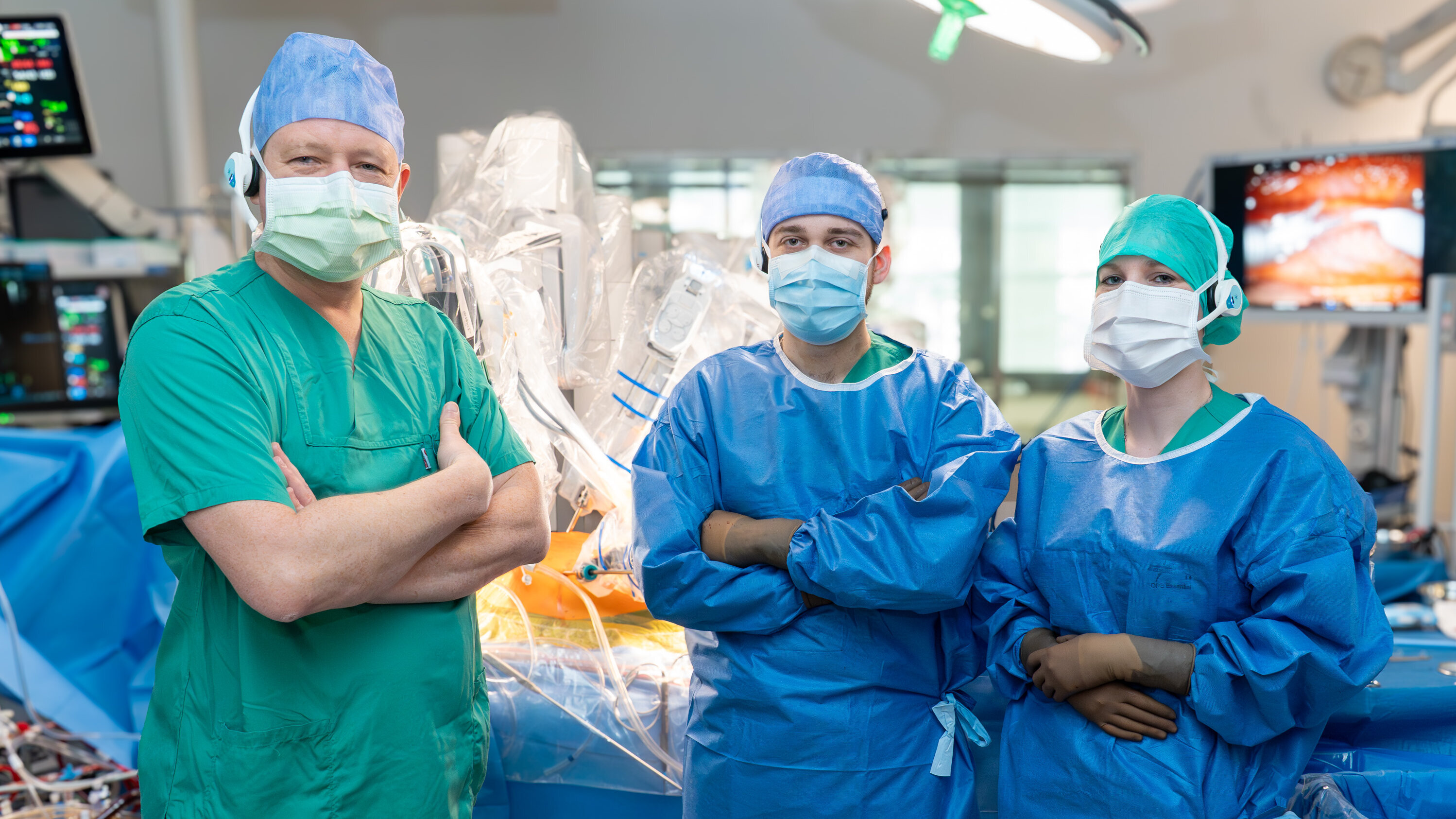
Julius Kaemmel is a member of the cardiac surgery team led by Prof. Jörg Kempfert (on the left in the photo), which performs these procedures at our hospital and is constantly refining them.
- Learn more about the robotics program at DHZC
The challenge for surgeons: “The left internal mammary artery is generally the best option for bypassing blockages in the coronary arteries and reliably restoring blood flow to the heart,” he says. “However, it must not be damaged under any circumstances during exposure.”
This is where the research project comes in: the plan is to develop an intelligent “prediction and early warning system” that combines augmented reality with artificial intelligence to prevent injury to the left internal mammary artery.
During robot-assisted bypass surgery, a high-resolution 3D camera provides images from inside the body, precisely visualizing the artery’s location, for example. The robot system’s finely maneuverable arms are positioned at the operating table and controlled via a cockpit.
The AI system is designed to analyze and predict their movements—and warn the surgical team early on before critical situations arise. “The system is primarily intended to support physicians during the learning phase of these highly complex procedures,” says Julius Kaemmel.
The Dr. Rusche Research Project is awarded by the German Foundation for Heart Research (DSHF) and the German Society for Thoracic, Cardiac, and Vascular Surgery (DGTHG) for patient-oriented research in cardiac surgery. Julius Kaemmel accepted the award at the annual meetings of the DGTHG and the German Society for Pediatric Cardiology and Congenital Heart Defects (DGPK), which took place last weekend in Cologne.
Numerous DHZC colleagues from cardiac surgery, pediatric cardiology, psychocardiology, research, and nursing were represented at the conferences on the topic of “Hotspot Cardiology” and actively contributed to the program (more info here).
We thank everyone involved for their dedication and wish Julius Kaemmel and the ICM team every success in the further development of their pioneering system!
