Explainable AI in continuously learning systems for heart failure
Über das Projekt
Heart failure is a very common condition, the prevalence of which is set to rise sharply in the coming years due to the ageing population. Its clinical presentation and course vary, and its causes are complex and multifactorial. The collection of multimodal data (proteomics, genomics, sensor data, quantitative imaging) has already contributed to significant advances in our understanding. Large population studies such as the UK Biobank also help to improve the assessment of risks and prognoses. The aim of the project is to develop and implement XAI models to improve the diagnosis and prognosis of heart failure, with a particular focus on right ventricular failure.
The prevalence of heart failure (HF) is steadily increasing – with unacceptably high rates of morbidity and mortality. Diagnosis and clinical management are currently based on the left ventricular ejection fraction, whereby we distinguish heart failure with preserved ejection fraction (HFpEF) as a distinct clinical entity from heart failure with reduced ejection fraction (HFrEF). Almost all therapeutic strategies that improve the prognosis in HFrEF are ineffective in HFpEF, meaning that there is currently no prognostically effective treatment for the large group of HFpEF patients (~50% of all HF patients).
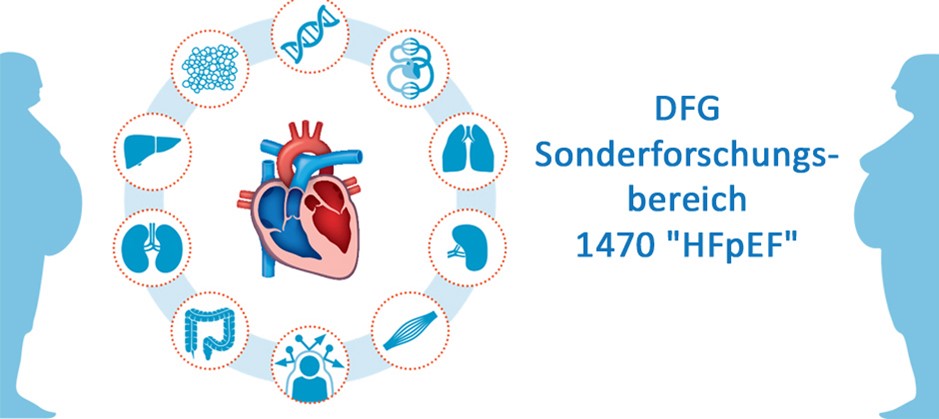
In this SFB, we are pursuing an interdisciplinary approach from organism to cell to molecule to characterise HFpEF as a heterogeneous systemic clinical picture. In doing so, we are testing the central hypothesis that the dysregulation of systemic, haemodynamic, metabolic and inflammatory signalling pathways underlies the development of different HFpEF phenotypes – with distinct pathophysiological characteristics that respond to different targeted therapies. To this end, we utilise our expertise in omics technologies, advanced imaging, functional phenotyping, AI and computer-aided modelling.

Projektinformationen
Keywords
Kennzahlen
DFG
Ihr Ansprechpartner