
Cardiovascular Modeling & Simulation
The research group develops mechanistic and data-driven models of the cardiovascular system with the aim of enabling patient-specific planning and optimization of treatment decisions. The focus is on the numerical modeling of cardiac and vascular hemodynamics, including interactions with implants and pharmacological interventions.
For clinical application, what-if simulation environments are being developed in which interventions can be virtually tested and optimized on individual patients before being performed. This concept culminates in the Digital Heart Twin Berlin—a patient-specific modeling platform for treatment planning and decision support.
This should be distinguished from the use of virtual cohorts: These are not intended for individual treatment decisions, but rather for the development, optimization, and safety-related evaluation of medical devices and therapeutic strategies. Population-based in silico studies make it possible to systematically analyze design decisions, performance limits, and potential risks as early as the preclinical phase.
Methodologically, we combine classical mechanistic modeling with modern artificial intelligence. While data-driven methods identify patterns and support predictions, mechanistic models provide explainable relationships and answer key clinical questions: Which therapy makes sense for this patient—and why?
In this way, we bridge the gap between simulation, product development, clinical decision support, and precision medicine.
Digital twins of the heart enable patient-specific modeling and thus contribute to precision medicine for the treatment of heart failure.
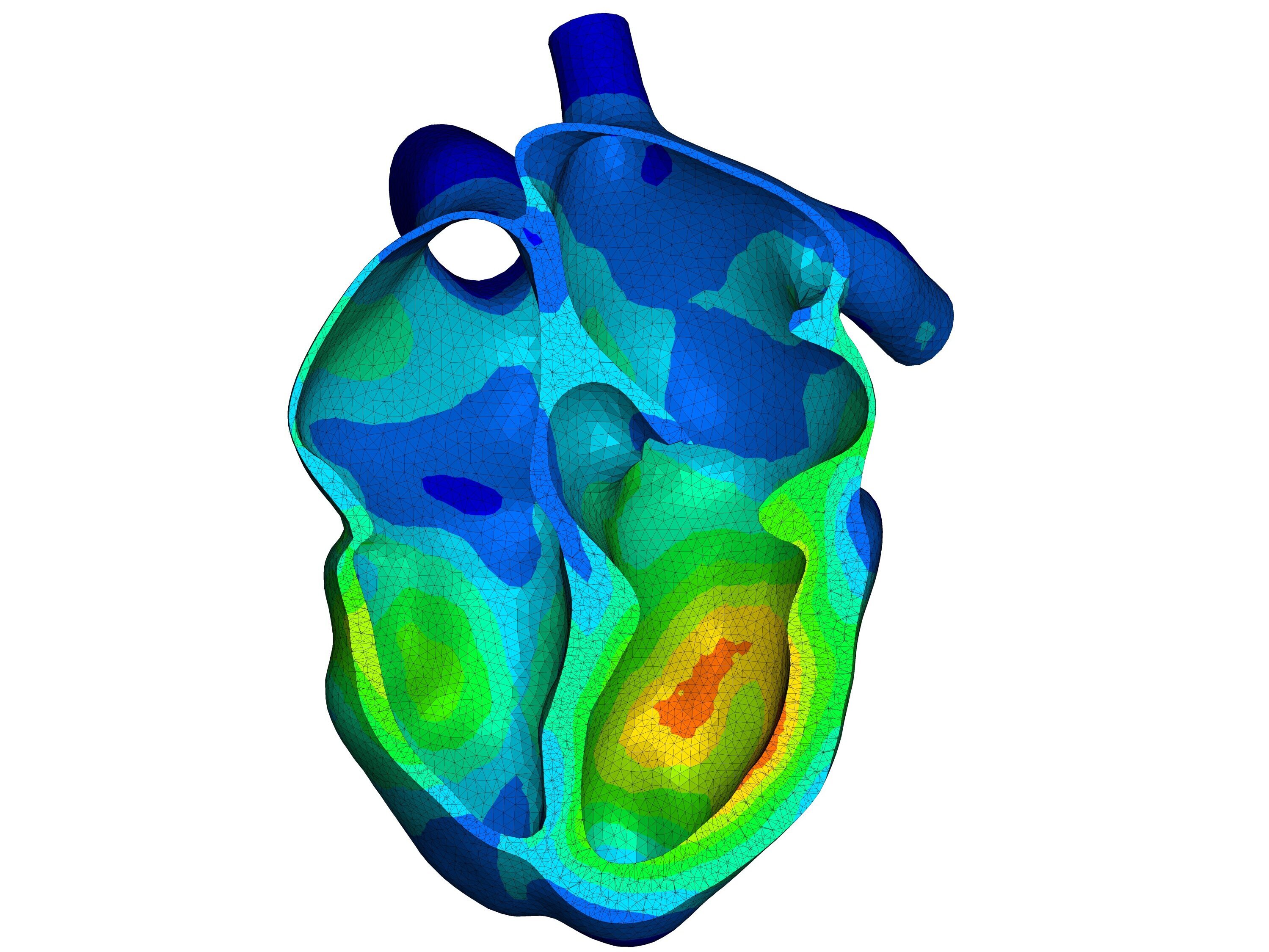
Digital twins of the heart enable patient-specific modeling and thus contribute to precision medicine for the treatment of heart failure.
Current Projects
- AI-supported computer-aided design assistant system for heart surgery
- Anatomy- and physiology-based environments for cardiac implant development
- Automated segmentation and classification of intracranial aneurysms
- Model-based treatment planning for patients with complex heart valve diseases
- Modelling cardiac haemodynamics using fluid-structure interaction and statistical shape models – Numerical sub-project
- Safety and Performance Testing in a Full-Scale Novel Oxygenator
- Turbulence and Blood Damage: An In Vitro Study of Turbulence-Induced Hemolysis in a Taylor-Couette System
Leitung
Prof. Dr.-Ing. Leonid Goubergrits
Head of Cardiovascular Modeling & Simulation
Prof. Dr.-Ing. Leonid Goubergrits
Head of Cardiovascular Modeling & Simulation
Dr. rer. med. Jan Brüning
Research Assistant
