
Six entries, two awards
With six scientific presentations, two outstanding papers, and participation in several sessions, the ICM was well represented at this year's conference of the European Society for Artificial Organs (ESAO).
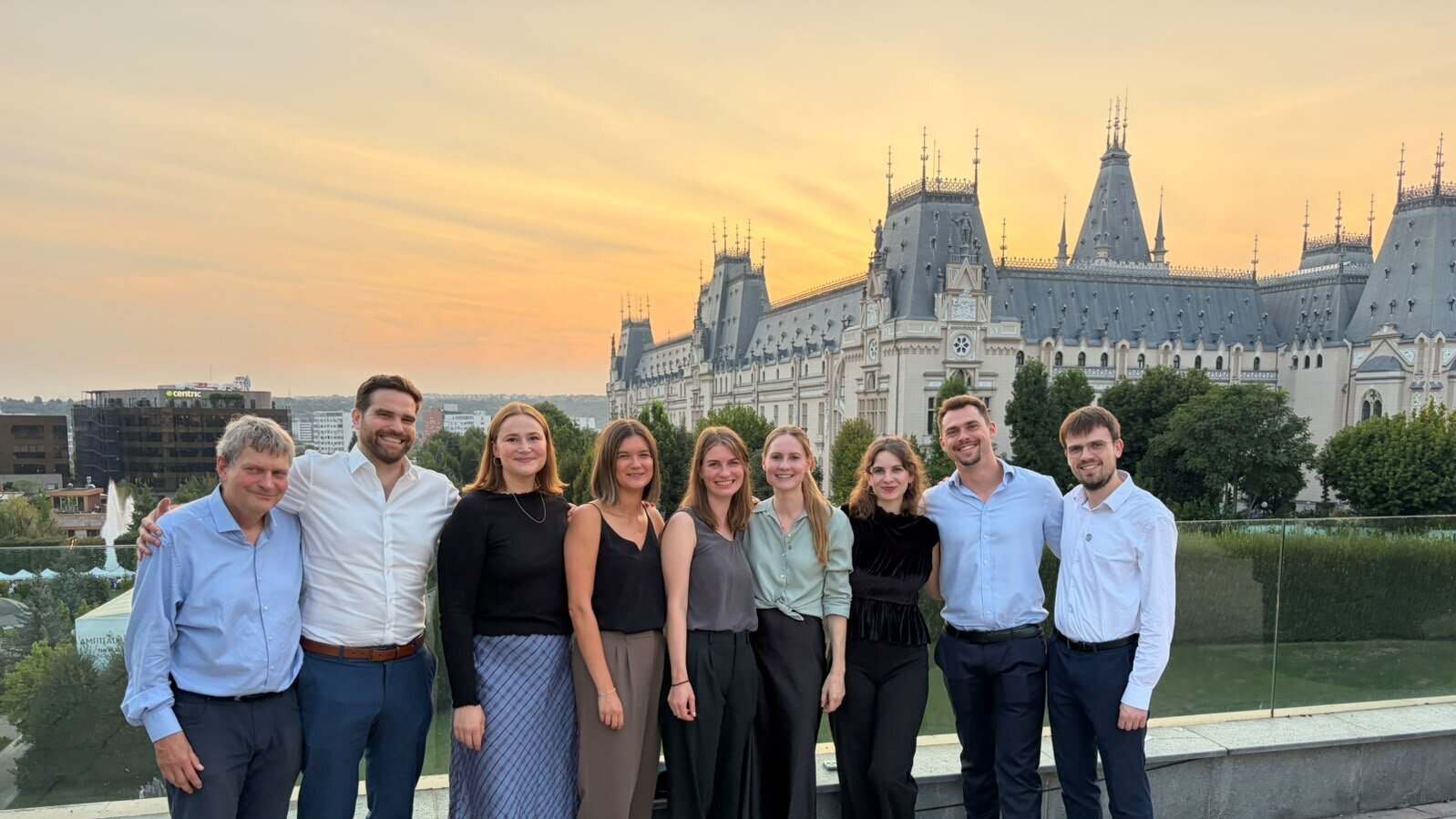
With six scientific presentations, two outstanding papers, and participation in several sessions, the ICM was well represented at this year's conference of the European Society for Artificial Organs (ESAO).
The ESAO 2026 took place from September 9–12, 2026, in Iași, Romania. The presentations focused, among other topics, on the testing of cardiovascular medical devices, blood compatibility, fluid mechanics, and experimental models for heart valves and cardiac support systems.
Isabell Esslinger was particularly successful: Thanks to two awards, she was invited to present her work in talks at the conference.
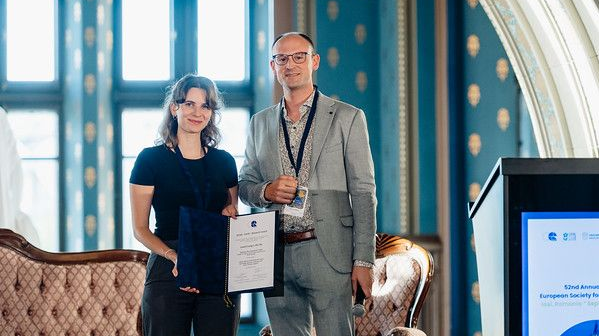
Isabell Esslinger was particularly successful: Thanks to two awards, she was invited to present her work in talks at the conference.
For her work “Platelet adhesion on hard material coatings and bonding agents for ventricular assist devices in a flow chamber,” she received the SAGE Award. Her paper, co-authored with Rosmarie Schoefbeck, titled “Linking Zeta Potential to Hemocompatibility of Micro-Structured Ti-6Al-4V: A Comparative Study Using Sheep and Human Blood,” presented jointly with Rosmarie Schoefbeck, was honored with the yESAO Exchange Award.
From Artificial Heart Models to Hemocompatibility
A key focus of the presented work was the development and validation of experimental models and testing methods for cardiovascular medical devices.
Isabell Schulz presented a passive beating-heart mock-loop using an ex vivo pig heart. The “Passive Beating-Heart Mock-Loop” was developed to enable investigations and testing of medical devices on the right heart under conditions as close to reality as possible.
Louis Wahle focused on another testing method. His presentation introduced a test setup for investigating hemolysis under controlled tubing compression. This is intended to allow for the targeted investigation of mechanical stresses and their impact on red blood cells.
Henri Wolff compared two experimental setups for visualizing flow-induced deformation of red blood cells at different hematocrit levels. The study contributes to a better understanding of the interactions between blood and flow under various conditions.
The blood compatibility of materials and medical devices was also the subject of several papers. In addition to the two award-winning papers by Isabell Esslinger, Vera Froese investigated flow-induced hemolysis in pediatric and adult blood. The results have since been published in the journal Artificial Organs:Shear-Induced Hemolysis of Pediatric and Adult Blood.
Sophia Krakowski also presented research on the surface modification of titanium through anodization.
Another area of research was presented by Sophie Becke. Her presentation described a pulsating bioreactor for in vitro studies of endocarditis in heart valve prostheses. The experimental setup enables studies under controlled, dynamic conditions.
ICM Also Represented on the Scientific Conference Organizing Committee
In addition to its own research presentations, the ICM was also involved in shaping the scientific program. Michael Lommel chaired the session “Macro-Hemodynamics & Closed-Loop Cardiovascular Systems”. Ullrich Kertzscher served as chair of both poster sessions.
The presentations at ESAO 2026 highlight the broad range of research conducted at the ICM in the field of artificial organs and cardiovascular support systems—from experimental test benches and flow analyses to the investigation of blood compatibility and the development of new models for heart valves and cardiac support systems.
