
Artificial Organs & Biofluid Engineering
The Biofluid Mechanics Laboratory conducts cutting-edge translational research at the intersection of engineering and biomedicine. Our scientific work focuses on investigating fundamental fluid mechanical phenomena in the human body and harnessing these insights for computational medicine. Building on our own methodological advances in numerical simulation and experimental fluid dynamics, we investigate and design the next generation of artificial organs through biofluid engineering.
We place particular emphasis on interdisciplinary collaboration extending far beyond traditional cardiology, including:
Infectious Diseases: We investigate fluid mechanical processes in sepsis and develop innovative bioreactors for studying multidrug-resistant pathogens.
Nanotechnology: In collaboration with TU Berlin, we investigate molecular communication involving autonomous nanobots for the early detection and monitoring of diseases.
Our academic mission spans the entire spectrum from fundamental research to the establishment of new clinical standards. In doing so, we carry forward the pioneering tradition of biofluid mechanics established by Prof. Klaus Affeld in 1985, combining this legacy with state-of-the-art digital methods and AI-assisted modelling to shape the future of the field.
Fluid Mechanics, Biofluid Mechanics & Simulation
Another area of research is the realistic modeling of biological fluids and the investigation of complex flow processes in medical systems. The goal is to reliably predict blood damage, thrombus risk, particle transport, and shear stress. The results form a central basis for the safe design of new medical technology.
Test Benches, Measurement Systems, Bioreactors & Experimental Development Platforms
Our expertise encompasses the development of physical and virtual test systems for the realistic investigation, measurement, and validation of medical technologies, as well as innovative bioreactors for infection and sepsis research. These include physiological test benches, experimental measurement platforms, and coupled simulation environments that enable the controlled reproduction of complex biological and clinical conditions in the laboratory.
By establishing defined flow conditions, drug concentration gradients, and targeted combinations of antimicrobial agents, we investigate in particular the formation and persistence of biofilms, the response of microorganisms to treatments, and the evolutionary development of antimicrobial resistance.
Our goal is to enable the early testing and optimization of new medical devices and treatment strategies, minimize associated risks, and advance our understanding of chronic infections, biofilm-associated diseases, and sepsis.
Multifunctional in vitro test bench for the physiological simulation of cardiac motion
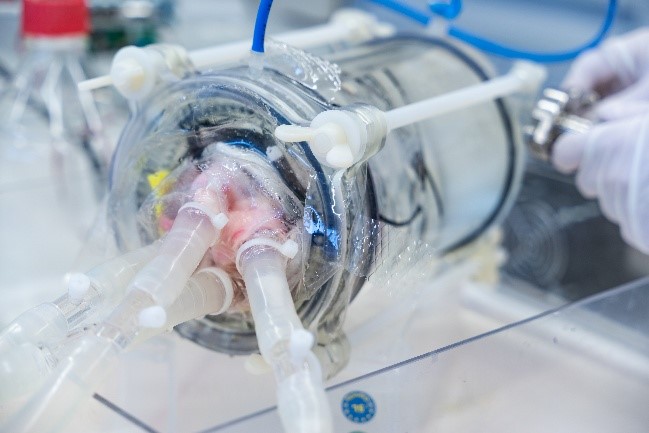
Multifunctional in vitro test bench for the physiological simulation of cardiac motion
Sensors, Measuring Instruments & Point-of-Care Diagnostics
Another area of focus is the development of portable, rapid, and non-invasive diagnostic systems for use at the patient’s bedside. The focus is on biosensors, nanoparticle-based detection methods, and telemedicine monitoring solutions. The goal is the early, digital, and decentralized detection of diseases.
TEXD is developing a mobile point-of-care system for rapid tuberculosis diagnosis using exhaled breath. Functionalized gold nanoparticles enable detection within seconds.
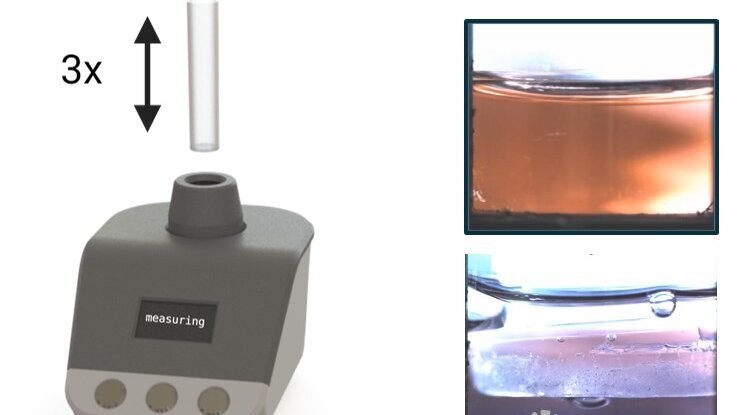
TEXD is developing a mobile point-of-care system for rapid tuberculosis diagnosis using exhaled breath. Functionalized gold nanoparticles enable detection within seconds.
Translation of Medical Devices
Our translation projects focus on the development, simulation, and validation of medical devices and precise drug delivery systems. Particular emphasis is placed on safety, dosing accuracy, and the absence of material-related contamination. The systems are designed for future cell, gene, and implant therapies.
In the new promotional video from Charité BIH Innovation, researchers from the ICM present the Alarm (infection breath test) and Puringe (silicone-free syringe) projects.
Both projects were funded by the BIH and have a strong translational focus.
The Puringe is an innovative syringe adapter that enables safe, precise, and completely silicone oil-free intravitreal injection.
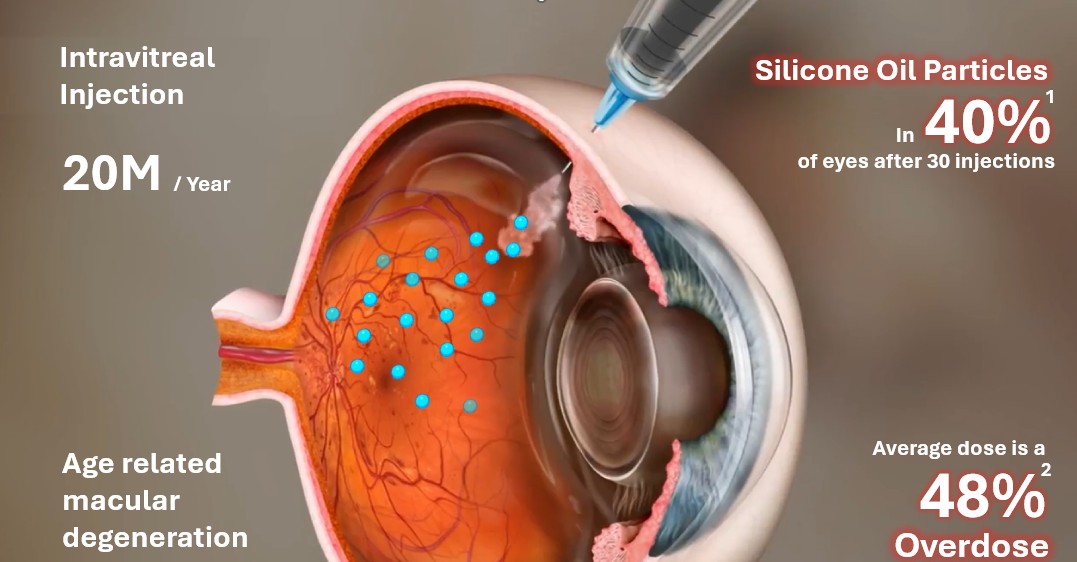
The Puringe is an innovative syringe adapter that enables safe, precise, and completely silicone oil-free intravitreal injection.
Current Projects
- A new type of blood collection and storage system
- A platform for the rapid combination therapy of fungal infections
- Anatomy- and physiology-based environments for cardiac implant development
- CAPTOR
- Development and experimental validation of a blood rheology model
- Development of a novel protein-repellent probe for the in vivo extraction of circulating tumor cells in patients with pancreatic adenocarcinoma
- Development of non-invasive and rapid tuberculosis screening method
- Dr. Wee
- Einstein Research Unit 'Technologies in Global Health' Case Study B
- Further Development and Clinical Validation of a Mobile, Non-Invasive Breath Test Device for the Rapid Diagnosis of Tuberculosis as an In-Vitro Diagnostic Device
- Investigation of a test bench for the in vitro simulation of infective endocarditis under near-physiological blood flow conditions in a prosthetic heart valve
- Mapping of metastasis-associated signalling pathways
- Portable biosensor for sweat-based detection
- Predicting the Development of Antibiotic Resistance
- Process Optimization for Nutrient Extraction and Biogas Production from Macroalgae
- Proliferation of circulating tumour cells for the personalised treatment of cancer patients
- Syringe adapter for precise and contamination-free injections
Management
PD Dr.-Ing. Ulrich Kertzscher
Head of Artificial Organs & Biofluid Engineering

PD Dr.-Ing. Ulrich Kertzscher
Head of Artificial Organs & Biofluid Engineering
Dr.-Ing. Michael Lommel
Head of Artificial Organs & Biofluid Engineering

Dr.-Ing. Michael Lommel
Head of Artificial Organs & Biofluid Engineering
